AI Jobs Explained: 8 Roles You Can Actually Move Into

“AI jobs” sounds like one career path, but it is really a family of roles. Some are deeply technical, while others rely on writing, teaching, project management or subject knowledge. The eight roles below are all reachable without a computer science degree, although requirements vary by company.
What employers actually look for
- Proof of work: real projects you can show.
- Clear communication: explaining AI results to non-experts.
- Domain knowledge: understanding education, health, finance or another field.
- Judgment: knowing when AI output is wrong or risky.
- Willingness to keep learning, because tools change fast.
Technical and non-technical roles
Roles such as machine learning engineer need strong programming and maths, so they are not covered here. The roles in this guide focus on using, guiding and checking AI systems. Titles differ between employers, so read several current job listings and look at the skills they ask for, not just the title.
See it in action
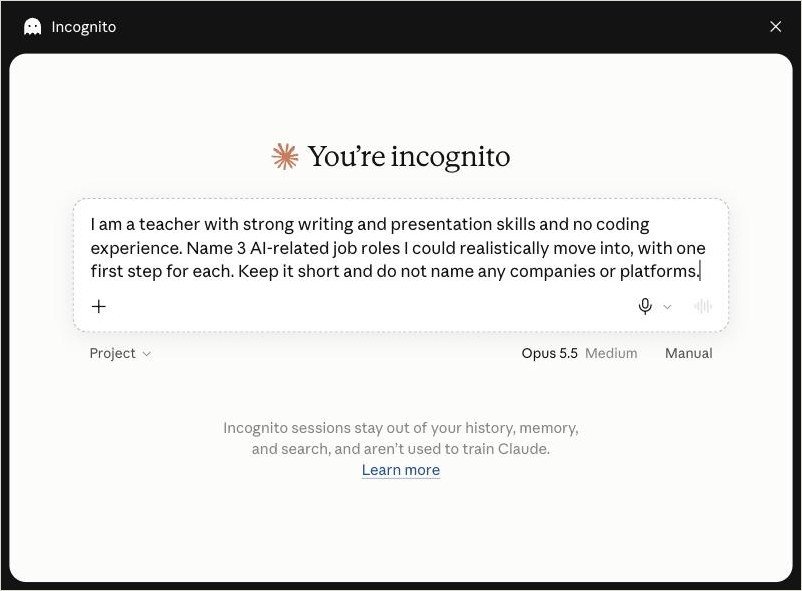
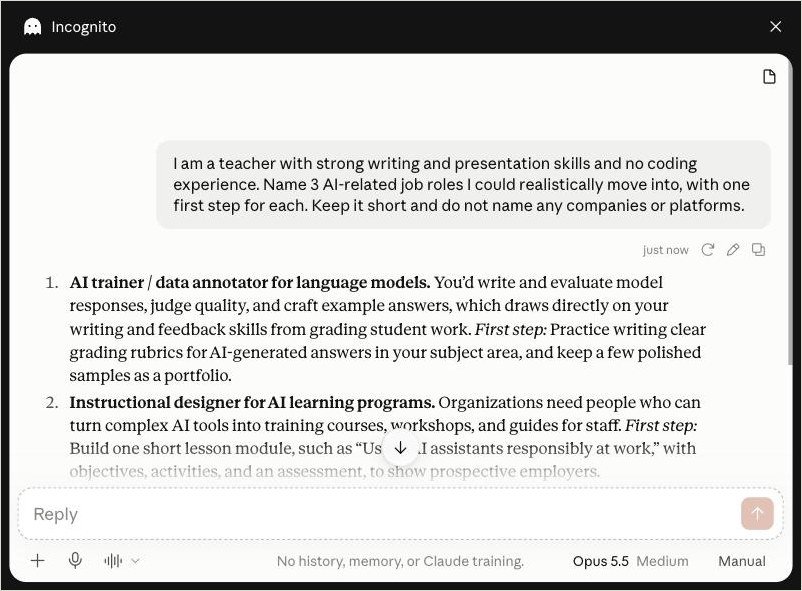
How I tested this: I ran this prompt in Claude in October 2026, and the screenshots below come from that run. AI answers vary, so your result may look a little different.
Common mistakes
- Chasing titles instead of skills. The same work appears under many names.
- Applying with certificates alone. A small portfolio carries more weight.
- Ignoring your background. A teacher, analyst or designer already has an edge in a specific field.
- Waiting until you feel ready. Start with a small project and improve it.
Your next step
Pick two roles that appeal to you, save five listings for each and write down the skills they share. Then build one small project that shows those skills. Our 30-day portfolio plan shows how.