How to Write Better AI Prompts: A Beginner’s Guide With Examples

Most disappointing AI answers come from a vague request, not a weak tool. The good news is that prompting is a skill you can learn in an afternoon. This guide gives you a simple formula, real examples and the mistakes beginners make most often.
The 5-part formula
Weak vs. strong
3 prompts to copy today
Why vague prompts fail
An AI assistant predicts a helpful reply from the words you give it. If you leave out the audience, the tone and the format, it falls back on the safe average: generic, long and a little bland. Every missing detail is a guess you hand to the tool.
A useful comparison is briefing a new colleague on their first day. They are capable, but they do not know your situation, your deadline or how you like things written.
Which parts do you really need?
- Quick tasks (rewrite a sentence): task and format are enough.
- Writing in your own voice: add context and paste a short sample of your writing.
- Anything factual or risky: add limits, such as “say so if you are not sure”.
See it in action
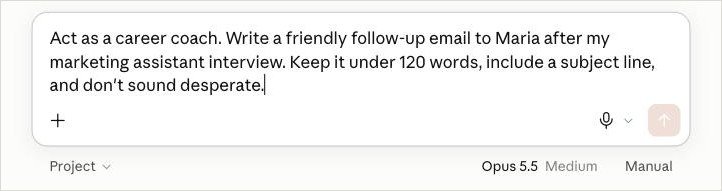
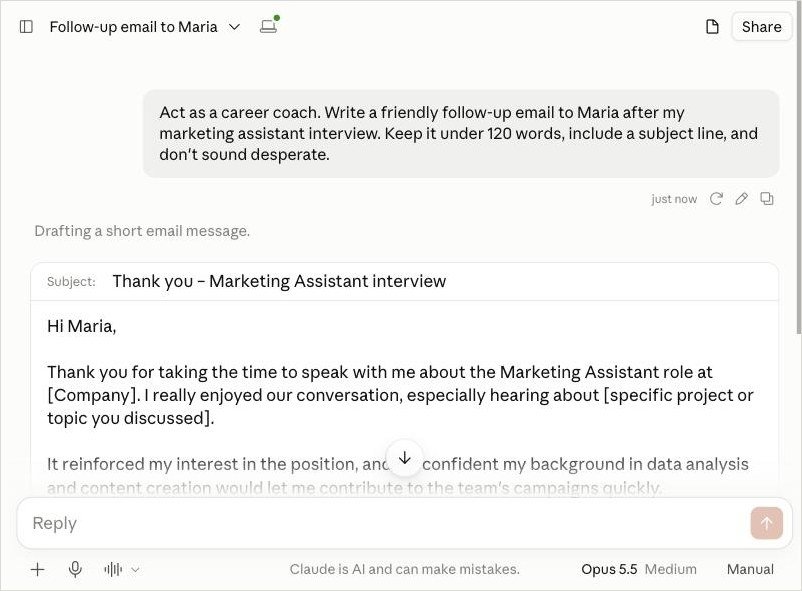
How I tested this: I ran this prompt in Claude in October 2026, and the screenshots below come from that run. AI answers vary, so your result may look a little different.
Common mistakes
- Asking for everything at once. Break big jobs into steps.
- Not naming the audience. “For a busy manager” changes the whole answer.
- Accepting the first answer. Follow up with “shorter”, “simpler” or “give me two more options”.
- Pasting private data. Remove names, numbers and anything confidential first.
Your next step
Take one task you did this week, such as an email or a summary, and rewrite your request using the five parts. Compare the result with what you got before, then save the better prompt in a note so you can reuse it. Once this feels natural, read our guide to 7 AI skills worth learning to see what to build next.