7 AI Skills Worth Learning (and How to Start Each One This Week)

AI tools are everywhere, but the people who get the most out of them are not always the most technical. They combine a few simple habits: asking clearly, checking what comes back, and knowing which jobs to hand over. These seven skills build on each other, so you can learn them in order.
How the seven skills fit together
Skills one and two, prompting and fact-checking, are the foundation: they make every other use of AI better and safer. Skills three and four turn an assistant into a reading and research helper. Skills five and six save time on repeat work and numbers. Skill seven, judgment, keeps you in charge of the result.
A simple weekly routine
- Monday: pick one skill from the list.
- Midweek: use it on a real task from your own work or studies.
- Friday: write three lines on what worked and what did not.
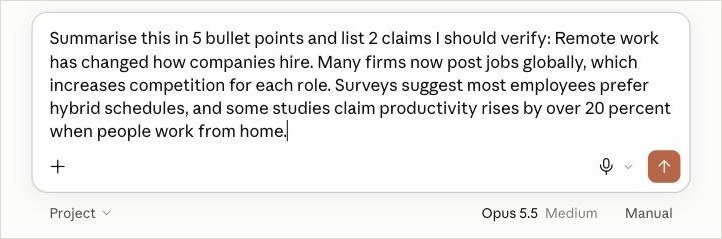
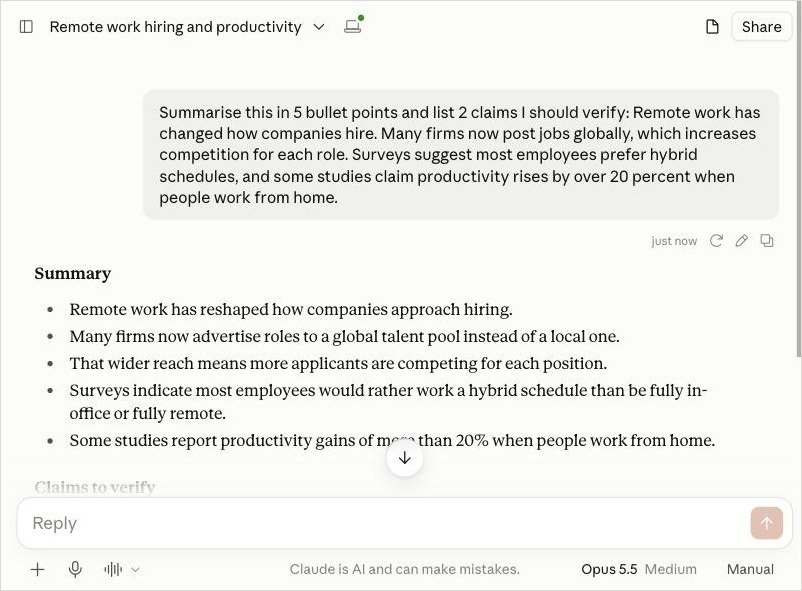
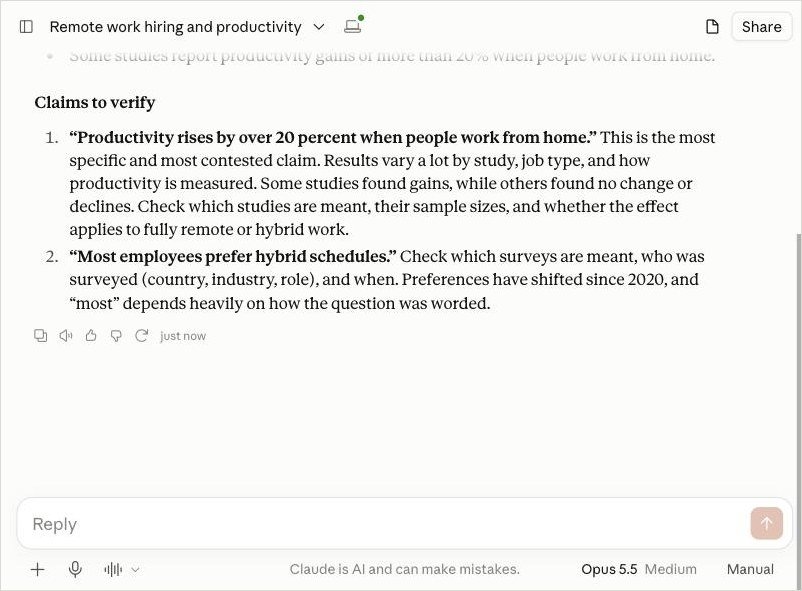
See it in action: summarise and fact-check
How I tested this: I ran this prompt in Claude in October 2026, and the screenshots below come from that run. AI answers vary, so your result may look a little different.
Common mistakes
- Trusting confident answers. AI can sound sure and still be wrong, so verify anything you plan to repeat.
- Learning tools instead of skills. Tools change quickly; habits like clear prompts and checking sources stay useful.
- Practising on made-up examples only. Real tasks teach you faster.
Where to go next
If you only do one thing, start with prompting. Our beginner guide, How to Write Better AI Prompts, walks through a formula you can use today.