How to Keep Up With AI News Without Burning Out

New AI tools and announcements arrive almost daily, and most are presented as breakthroughs. Trying to follow all of it leads to tiredness, not knowledge. A small, steady system works far better than constant scrolling.
Why AI news feels overwhelming
Companies announce loudly, social media repeats it, and every launch is framed as a turning point. Very few of them change how you actually work. The skill is not reading more, but filtering better.
A 15-minute daily routine
- 5 minutes: scan the headlines from your three sources.
- 5 minutes: read one item that matters to your work or studies.
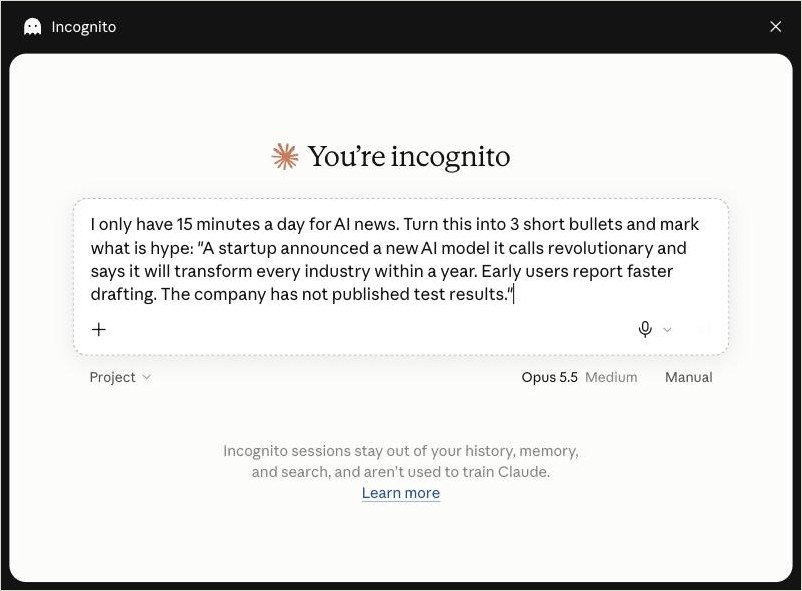
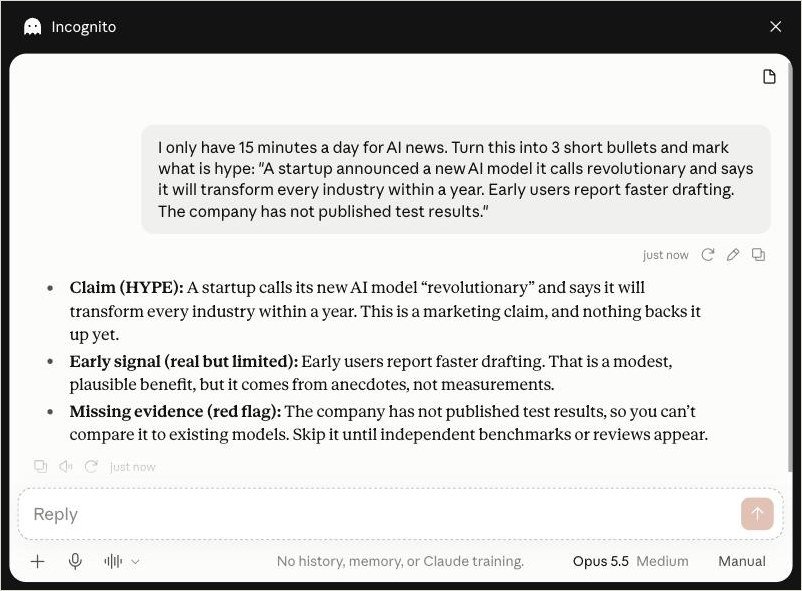
- 5 minutes: paste it into an AI assistant for a short summary and a list of claims to verify. Then write down one action, or “ignore”.
See it in action
How I tested this: I ran this prompt in Claude in October 2026, and the screenshots below come from that run. AI answers vary, so your result may look a little different.
Common mistakes
- Following dozens of accounts. Three good sources beat thirty noisy ones.
- Reading news first thing and last thing. One fixed slot protects your focus.
- Sharing before checking. Open the original source first.
- Confusing announcements with products. A demo is not the same as something you can use today.
Your next step
Pick your three sources today and put a 15-minute slot in your calendar. When something sounds too good to be true, use our checklist: AI hype vs. reality: 6 questions to ask.